

For specifiers · Northeast Ohio
Specifying a SportMaster court in Northeast Ohio, from the installer who bids it.
For the architect, the engineer, the parks director and the school facilities manager who has to write or check the specification for a court. Which of SportMaster's specifications goes with which court, what they require that every bid should be held to, and where each document is, from a contractor who bids public court work.
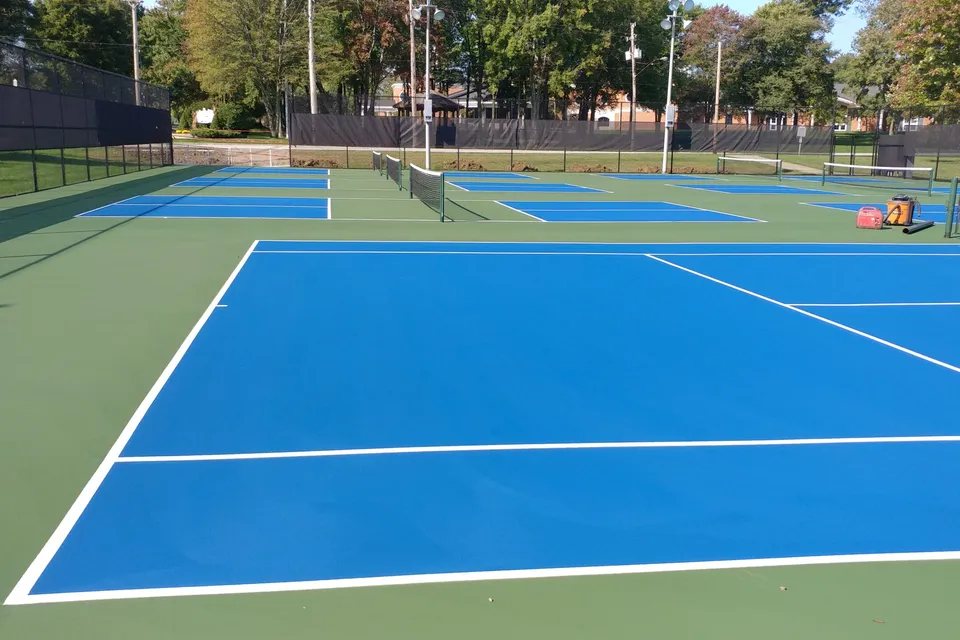
This page is for the person who writes or checks the specification for a court in Northeast Ohio. We are Industrial Surface in Cleveland, a factory-authorized SportMaster installer, and we do public court work the public way: on competitive bids, on quotes below the bidding threshold, and through the Equalis Group cooperative contract COG-2138B.
The specification is where a court is won or lost, before anyone bids. It decides how long the new pavement cures, how the low spots are judged, how many coats of each layer go down and in what weather. When those are written in, every bidder prices the same court. When they are left out, the bids are not comparing the same thing.
SportMaster publishes its own specifications for each of the court systems on this page, over asphalt and over concrete. The engineering specifications are a page or two each. The guide specifications are Word files of seven or eight pages in the three-part format, written for an architect to edit into a project manual. Below: which documents go with which court, the requirements in them that separate a sound job from a cheap one, and where every document is in our library.
Which specification
The court decides the document.
A worn asphalt court, resurfaced
The color coating specification over asphalt and the color coating guide specification over asphalt for the sport: tennis or basketball and recreational courts. On an old acrylic court the guide specifications ask for 1 coat of Acrylic Resurfacer where the repairs are minimal and 2 where there is extensive crack or low-spot repair, then at least 2 color coats. Check one thing first: SportMaster's 10 best practices warn that acrylics do not bond well to coal tar or most asphalt-based sealants, so find out whether the court was ever sealcoated before the specification assumes it can simply be coated.
A new asphalt court
The same documents as a resurfacing: the color coating specification over asphalt and the asphalt guide specification for the sport. They set the cure of new asphalt at 14 to 30 days before coating. The engineering specification recommends at least 2 coats of Acrylic Resurfacer on new asphalt, and the guide specifications call for 2. Both send the construction of the court itself to the American Sports Builders Association's guidelines, so the stone, the drainage and the plane belong in your paving section; our site preparation article describes how we build them.
A concrete or post-tensioned court
The color coating specification over concrete and the concrete guide specification for the sport: tennis, pickleball or basketball and recreational courts. Concrete asks more of the slab than asphalt does: a vapor barrier under it, drainage around it, no curing compounds, a medium broom finish or similar roughened texture and never a steel trowel, and 28 days of cure. Then an acid etch on uncoated concrete, the primer, and Acrylic Resurfacer before the color. Our post-tensioned concrete article is about when that kind of slab is worth building.
A cushioned court, standard or premium
The ProCushion engineering specifications, over asphalt and over concrete, and the cushioned guide specifications for the sport. The base preparation is the hard court's; between the resurfacer and the color go the cushion coats: 3 of CushionMaster II and 2 of CushionMaster I for the standard system, 5 of CushionMaster II and 2 of CushionMaster I for the premium. The tennis and basketball cushioned guide specifications name Flexible Concentrate ColorPlus as the color over the cushion. Write standard or premium into the specification, because the coat count is the difference. The ProCushion page covers the system.
A pickleball court
The color coating specifications, over asphalt and over concrete, cover a pickleball court as they do a tennis court: SportMaster's color coating sheets list pickleball courts among their uses, and our pickleball courts carry ColorPlus. The pickleball guide specification over concrete names the ColorPlus System and lays the lines out to the USA Pickleball rules. The pickleball court diagram has the court.
A basketball or recreational court
The basketball and recreational courts guide specifications (over asphalt, over concrete), with the color coating specification over asphalt or over concrete behind them. The color coat is the same ColorPlus system as on a tennis court. What changes is the line layout, which the guide specification ties to the governing body: the NBA rules, NFHS for high schools, NCAA for colleges, the USTA rules, or another game layout you name. The basketball court diagram has the lines.
What to hold a bid to
What SportMaster's documents ask for.
-
01
Cure the base before the first coat
SportMaster's specifications put new asphalt at 14 to 30 days of cure before application and new concrete at 28 days, and its 10 best practices recommend 30 days for asphalt in good curing weather. Write the cure into the specification and into the schedule. Rushing the cure is the commonest mistake in the trade.
-
02
Prepare concrete the way the documents say
The concrete specifications require a vapor barrier beneath the slab and perimeter drainage, no curing compounds (moisture curing only), a medium broom finish or similar roughened texture, never a steel trowel, and an acid etch rinsed clean. For the primer the two kinds of document differ: the engineering specifications ask for SportMaster Acrylic Adhesion Promoter or a suitable primer on new or uncoated concrete, the guide specifications for adhesion promoter over the entire concrete surface. Smooth existing concrete is sandblasted, shotblasted or scarified to a broom-like texture first. The concrete guide specifications have the installer verify the vapor barrier, the drainage and the absence of curing compounds before any work starts, and the best practices sheet recommends a vapor barrier of 10 mil.
-
03
Hold the plane, and say how low spots are judged
The 10 best practices give the slope as .8333 to 1.0 percent, and SportMaster's tennis court diagram shows 1 percent as the maximum for hard courts. For low spots, the same best practices sheet says to flood the court or wait for rain and, 1 hour later, chalk around any puddle that covers a 5-cent piece; the specifications have depressions 1/8 inch and deeper leveled with Acrylic Patch Binder or an Acrylic Resurfacer patching mix before the resurfacer. Put the test and the depth in the specification, so the leveling is priced in the bid and not argued over on the court.
-
04
Repairs before any coating
Every one of the specifications has the cracks filled and the depressions leveled before the resurfacer goes on, and the guide specifications want the repairs flush and smooth with the surface around them. The engineering specifications name SportMaster's crack fillers or another suitable filler; the best practices sheet rules out hot or cold asphalt-based crack filler. The asphalt guide specifications list the crack repair system as a related section of its own. Our own repair for working cracks is a fabric-membrane system, which is not SportMaster's; our crack repair page covers it, and SportMaster's crack fillers and patch binder have a page of their own.
-
05
Count the coats, layer by layer
Acrylic Resurfacer: 1 or 2 coats as the surface's roughness and porosity require, with at least 2 recommended on new asphalt; on concrete, 1 coat or more over the primer. Cushion, where it is specified: 3 coats of CushionMaster II and 2 of CushionMaster I for the standard system, 5 and 2 for the premium. Color: at least 2 coats. Lines: Stripe Rite primer over the taped edges to stop bleed-under, then at least 1 coat of line paint. The guide specifications have the coats applied with a soft rubber squeegee. Our own practice is 2 coats of ColorPlus, with the lines taped and painted by hand.
-
06
The weather, and the cure before play
The guide specifications forbid application when the air or the surface is below 50 °F (10 °C), during application or within 24 hours after it, and when rain is expected in that same window. They open the court to play after a minimum of 24 hours of curing. Our coating season in Northeast Ohio runs roughly May to mid October, so a specification with a completion date should leave room for the weather.
-
07
Ask who will apply it
The guide specifications ask for an applicator "regularly engaged, for past 3 years" in similar work, with persons trained for it, and they state: "Applicator must be authorized installer of the surfacing brand used." The submittals include the applicator's list of completed projects and the manufacturer's authorized installer certificate. For our part, SportMaster's letter naming us an authorized installer is ready for the bid file.
-
08
Another brand, on the specification's terms
The guide specifications name SportMaster and say that all other brands must be pre-approved by the architect or owner 7 days before the bid date, with the bidder furnishing every submittal the specification lists: product data, color samples, independent test reports, the manufacturer's certification, project references, the warranty and the authorized installer certificate. That article is what brings every alternate in with the same papers as the named system.
The numbers
What SportMaster's sheets say.
Taken from the maker's own documents and checked against them each time this site is built. The sheet named beside each figure is the authority; open it before you write a specification.
Local work
Public work, on the record.
City jobs on the public record, each bought a public way: Parma Heights through the Equalis Group cooperative contract without a separate bid, Highland Heights' Community Park courts as lowest and best bidder, the Cahoon Park courts in Bay Village on quotes, and the Bradley Park repairs chosen on quality and price.
-
Multi-sport · Rebuild and resurfacing
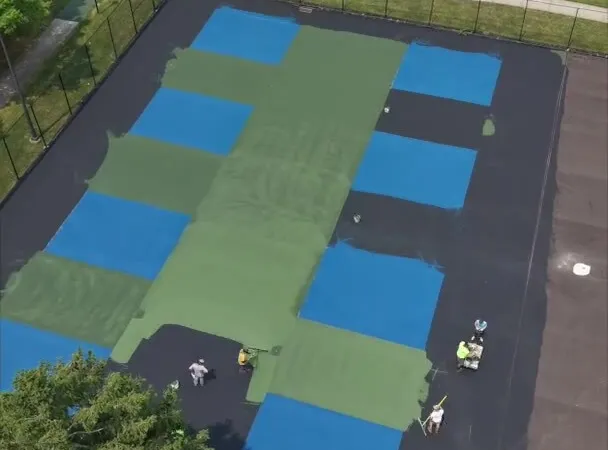
Parma Heights: three tennis and seven pickleball courts at Greenbrier Commons
A city's whole court complex rebuilt in one season, bought through the SportMaster cooperative contract without a separate bid. The biggest job on the public record.
-
Tennis · Resurfacing
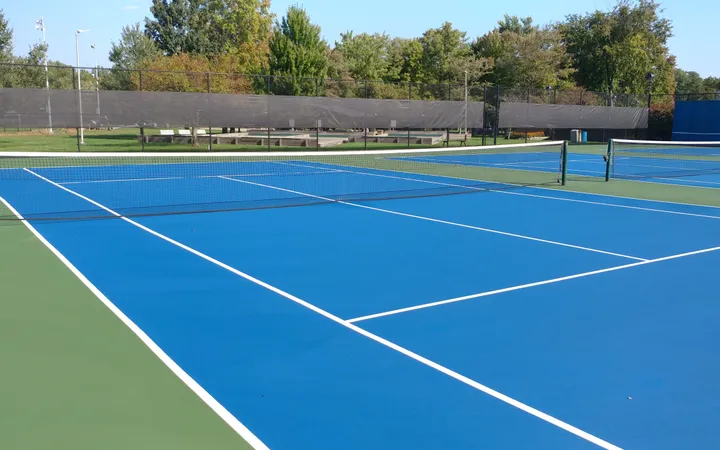
Highland Heights: eight tennis courts resurfaced, twice
Eight courts done once, and done again when the city rebuilt the asphalt under them. The surface outlasted its base.
-
Tennis · Repair and resurfacing
Bay Village: Cahoon Park tennis courts, repaired and resealed
Courts we had resurfaced before, back on our schedule. Repeat customers are the whole business.
-
Tennis · Repair; court surfacing as subcontractor
Bay Village: Bradley Park repairs, and the Reese Park courts as subcontractor
Two parks, two ways of working: direct for the repairs, under a paving prime for the rebuild.
The documents
SportMaster's specifications, by court.
The maker's own engineering and guide specifications, kept in our documents library. Each opens on a page that shows the document and offers the file.
Engineering specifications
The short form, a page or two each: open these to check a system's preparation and coats at a glance, by system and by base.
Guide specifications: tennis
Word files in the three-part format, to edit into a project manual for a tennis court: hard or cushioned, over asphalt or concrete.
- Tennis: color coating system, over asphalt · guide specification
- Tennis: color coating system, over concrete · guide specification
- Tennis: cushioned system, standard, over asphalt · guide specification
- Tennis: cushioned system, standard, over concrete · guide specification
- Tennis: cushioned system, premium, over asphalt · guide specification
- Tennis: cushioned system, premium, over concrete · guide specification
Guide specifications: pickleball
For a pickleball court over concrete, with the lines to the USA Pickleball rules.
Guide specifications: basketball and recreational courts
Six cases for basketball and multi-purpose courts, with the lines to the governing body you name.
- Basketball and recreational courts: color coating system, over asphalt · guide specification
- Basketball and recreational courts: color coating system, over concrete · guide specification
- Basketball and recreational courts: cushioned system, standard, over asphalt · guide specification
- Basketball and recreational courts: cushioned system, standard, over concrete · guide specification
- Basketball and recreational courts: cushioned system, premium, over asphalt · guide specification
- Basketball and recreational courts: cushioned system, premium, over concrete · guide specification
Companion documents
For the drawings, the quantities and the owner's manual: open these beside the specification.
- 10 best practices of repairing and resurfacing tennis and basketball courts · guide
- Tennis court material requirements · guide
- Sport surfaces maintenance manual, 2024 · guide
- Tennis court layout, striping and slope · court diagram
- Pickleball court diagram · court diagram
- Basketball court diagram · court diagram
Questions
Asked by specifiers.
Pages that go with this one:
- ColorPlus color coating system · Resurfacer, color coats and lines over asphalt or concrete.
- ProCushion · The cushioned system, standard or premium, under the color.
- Crack repair products · SportMaster's crack fillers and patch binder, by the sheet.
- Court dimensions · The lines, the run-off around them and the slope under them.
- How a project goes · From the call and the site walk to the lines.
- About the company · Credentials for the bid file: memberships, contract, certifications, warranty.
- The documents library · Every SportMaster data sheet, safety data sheet and specification we keep.
The other SportMaster pages:
Can a public specification name SportMaster, and what about "or equal"?
SportMaster's guide specifications are written with SportMaster named as the manufacturer, and they deal with other brands themselves: all other brands must be pre-approved by the architect or owner 7 days before the bid date, and the bidder must furnish the same submittal documents. Whether a named brand suits your purchasing rules is for your purchasing office and counsel to decide, not for us. A member city, school or agency can also buy SportMaster court work through the Equalis Group cooperative contract COG-2138B, under which we are SportMaster's authorized installer, without running its own bid; Parma Heights bought its court rebuild that way.
Which specification for a tennis court that will also carry pickleball lines?
The tennis color coating guide specification for the base, over asphalt or over concrete, since the surface is a tennis surface. Its line markings article lays out the lines to the USTA rules; add the pickleball lines there, to USA Pickleball's rules, and name their color. The guide specifications say they must be reviewed and edited by the architect to meet the project's requirements, and this is one of those edits. Our conversion article covers the layouts, and the pickleball court diagram has the court.
We already have a specification. Will you price it?
Yes. We can price it as written and, where it helps, propose an alternate with the reasons spelled out. On every job we offer a free site walk and a written proposal with the scope and the materials by name. The process page shows how a job runs from the call to the lines.
Where are the safety data sheets and data sheets for a submittal?
In our documents library, where every SportMaster document has a page of its own. Each system page also lists its data sheets, safety data sheets, specifications and mixing procedures together: the color coating system and ProCushion.
Should a new court be asphalt or concrete?
It depends on the owner and the site, and we price both when the site allows it. Our article on post-tensioned concrete courts sets it out: the slab costs more up front and suits a new court, an owner with a forty-year view, clay that has already cracked an asphalt court, or a bank where crack repair has been the biggest line in the budget; asphalt suits resurfacing or overlaying an existing court, a budget that will not stretch, a site a concrete pump cannot reach easily, and most park courts. SportMaster writes a specification for each base, so the choice of base does not limit the surface.
How is the finished court maintained?
SportMaster's maintenance manual is the document to hand the owner with the court: regular cleaning, once a month suggested; standing water removed; leaves kept off, above all in the fall; soft brooms, and care with a pressure washer; no snow or ice melt chemicals; and an inspection every spring, with pavement repairs and resurfacing left to a sport surfacing professional. A cushioned court has a ProCushion maintenance sheet of its own, and our maintenance page has the calendar.
Free estimates
A SportMaster court, from the installer down the road.
Send the address and what you have in mind. We walk the site, measure it, and send a written proposal that names the system, the coats and the season it fits.
The yard
4000 East 86th Street, Cleveland, OH 44105
Off Broadway Avenue, south of downtown, ten minutes from I-77 and I-490.
Serving Cuyahoga, Summit, Lake, Lorain, Medina, Geauga, Portage, Stark and Ashtabula counties. Municipal, school, club, HOA and commercial work; residential courts by the job.